Our intention is to support stakeholders in cultivating long-term relationships across the supply network by deepening understanding of the many factors behind sustainable and ethical sourcing. The following questions and information are offered to help explore a particular species, reflect on sourcing or harvesting practices, and guide stronger, more reciprocal relationships among buyers, harvesters, and the plants themselves.
Yerba Mansa Essence & Use
Rooted in bosques of the American Southwest, Anemopsis californica holds deep medicinal, ecological, and cultural significance. Its roots and aerial parts are used to support digestion, respiration, and overall seasonal wellness, reflecting a long tradition of whole-plant care.
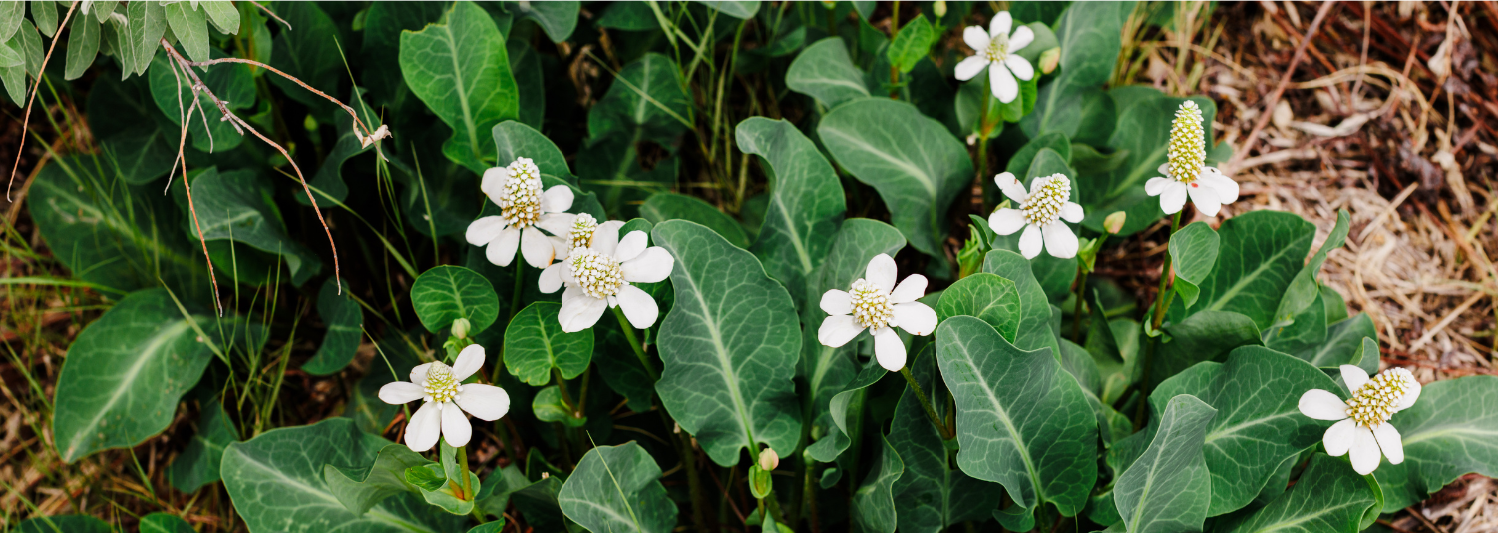
A perennial flowering plant in the Saururaceae family, it grows from aromatic brown rhizomes or stolon runners producing baby plants.⁴ The plant produces a spike-like cluster of tiny bisexual flowers, each with six stamens, three carpels, and an inferior ovary. These flowers lack true petals or sepals; instead, white, petal-like bracts create its showy appearance from its foliage, having glabrous (smooth) leaves.²
Yerba Mansa reflects a practice of plant medicine inseparable from place, reminding us that healing grows through relationship with water, soil, and community.
“As Yerba Mansa’s presence grows across cultural and herbal traditions, responsible sourcing becomes vital to protect
both its medicine and its home. This brochure offers standards that uphold ecological integrity and ethical supply
chains - a call to safeguard lasting abundance, resilience, and community trust.”
Native Habitats
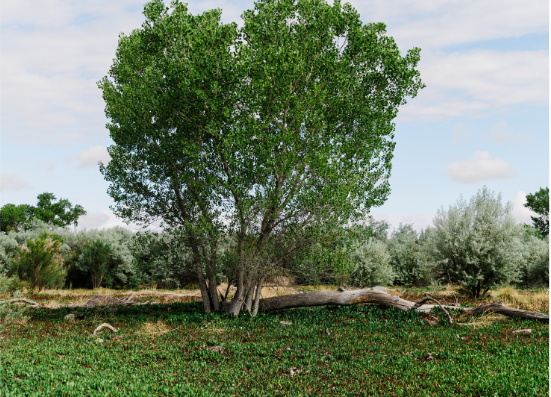
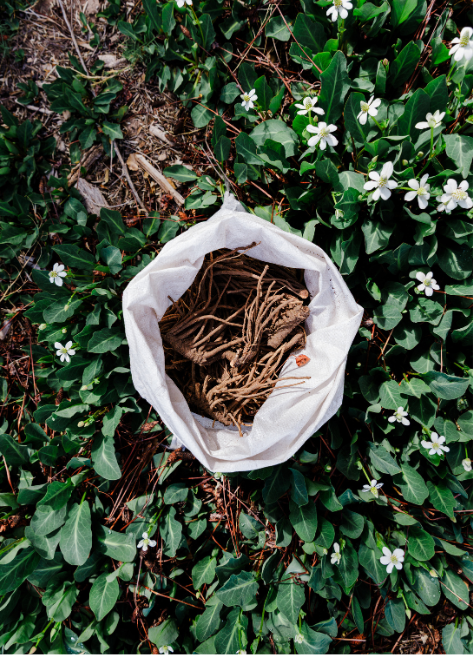
Yerba Mansa growing in riparian soils along a Rio Grande bosque, 2025
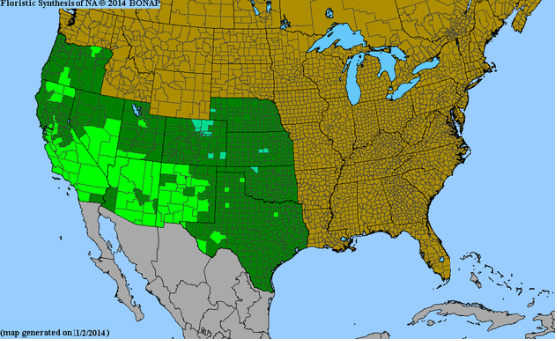
Yerba Mansa thrives in floodplain soils where desert river surfaces meet cottonwood and mesquite trees within riparian corridors. Mostly found across New Mexico today, it once spread throughout Arizona, Southern California, Utah, Texas, and Northern Mexico.¹´²
Its vegetative presence within the Southwestern bosque signals vitality in the floodplain, where it inhabits and reproduces through creeping stolons that anchor young plants in delicate sandy soils. It thrives near cottonwood trees, growing in relationship with their fallen, decomposing leaves and branches. Healthy stands can spread across several acres along the bosque, blooming from May through July, while September brings orange-brown foliage as the plant prepares for the hibernation months ahead.⁴
Conservation Status
As agriculture expanded along the Rio Grande and Colorado Rivers, water diversion for cattle grazing became a priority. This disruption harmed riparian vegetation and native trees such as cottonwoods, degrading Yerba Mansa’s habitat and opening many areas to development. Today, Yerba Mansa is listed as “At-Risk” by United Plant Savers due to wetland loss, groundwater decline, and the degradation of desert riparian corridors. Although its rhizomes spread vigorously in saturated soils, the species depends on stable water tables—conditions increasingly threatened by drought and diversion.² Many historic stands have diminished as springs dry or invasive plants take hold. Where habitat remains intact, Yerba Mansa regenerates well, making regenerative harvesting, cultivation, and riparian restoration essential to its long-term conservation.⁴
Sourcing & Supply Network
Yerba Mansa is sourced almost entirely from the wild, gathered by small-scale harvesters, often in or near Indigenous communities, who know its desert floodline habitats intimately. Because the plant grows abundantly in only one region and generational knowledge transfer is declining, maintaining skilled, ethical harvesters is increasingly difficult. All material is hand-harvested, carefully cleaned, and partially dried before reaching local buyers, making the work labor-intensive.⁴
Richard McDonald with Yerba Mansa
Ethical purchasing requires transparency around harvest sites, water conditions, and regeneration practices, which can be challenging. As riparian ecosystems diminish, buyers are called to support restoration, monitoring, small-scale cultivation, and invest in wildland stewards harvesting in right relationship with place. These partnerships protect wild stands while sustaining Yerba Mansa in the herbal marketplace.
“If it gives to me liberally, I take
liberally. The Mansa plants are resilient
and can grow abundantly year after
year. At times, there has been drought
or too much rain causing collection
conditions to be impossible, you have to
be prepared to walk away if the
environmental conditions aren’t right.”
Sustainable Harvesting Practices
Sustainable Wild Collection of Yerba Mansa Root
Harvest Yerba Mansa only from abundant healthy stands, only take less than 10% from a one-acre (healthy stands should stretch one-acre at least) healthy area, leaving weaker patches untouched. When digging, remove only 30% of the root clump, replanting the remaining 70% immediately after up-rooting and fill the hole completely, finally covering the hole with nearby branches and foliage for protection.⁴
Best yields take place after rain or monsoon, when soil is workable in order to re-plant during a gentle harvest. Checking river flow, weather, and soil type months ahead of harvest, and choose sandy, elevated areas in the middle in middle of a stand over a mile from roads. Work gently with a hori hori or small shovel, space collectors 20–30 feet apart, and replant baby roots in the same hole. Cover replanted spots with soil, aerials, and debris so the site looks undisturbed like you were never there – ensuring Yerba Mansa’s long-term regeneration.⁴
Harvest Only From
Healthy, Mature Stands
Take Only a Portion,
Leave the Stand to Regenerate
Restore the Site
After Harvest
Guiding Questions for Ethical Sourcing
Relationships & Knowledge
Who are the collectors or communities harvesting Yerba Mansa?
Are permits and/or permission obtained?
How did they learn to identify and work with this plant?
What motivates them to continue harvesting each year?
Harvesting & Stewardship
What steps are taken to ensure the plant regenerates after harvest? Do they return to same plant stands?
How are harvesters monitoring bio-diversity health, weather, and water flow in collection areas, before and after harvest?
Is the timing of harvest aligned with optimal regeneration of plant stand?
What measures are in place to prevent over harvesting or habitat disturbance?
Processing & Quality
How is the plant handled post-harvest – washed, dried, and stored?
Are the harvesters aware of raw material specifications? Are materials traced back to specific regions or collectors?
What portion of processing occurs near the collection site versus at a central facility?
Are there possible contaminates nearby that may reach the plant stands? Keep in mind heavy metals can be an issue with Yerba Mansa roots.
Are any pollutants upstream of nearby rivers, streams, or bodies of water? Such as agriculture run- off?
Community & Fairness
How are harvesters compensated for their work and knowledge?
Are there local investments (with restoration or training) supported through sourcing?
How does this partnership strengthen community resilience and traditional knowledge transmission?
Cultural & Community Context
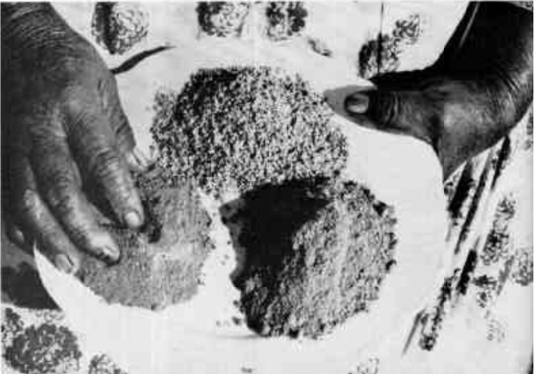
Bark from a living live oak tree. Section of deer horn thoroughly burned in a wood fire Yerba del manzo, or swamproot. Deer manure pellets--- Desert Plants and People by Sam Hicks - Part 1 --- Page 12
Across the Southwest, Yerba Mansa has long been woven into Indigenous health traditions and is harvested with offerings, restraint, and gratitude. Root, leaf, and seed are used for wellness, ceremony, and nourishment, reflecting reciprocal relationships with water and land. Stewarded in rhythm with seasonal flooding, its colonies stabilize soils and help filter desert waters downstream.¹‘²‘⁴ Known as Yerba Mansa or Yerba del Manzo, as well as Lizard Tail and Swamp Root, the plant’s indigenous names are Vavish (Pima), Chivnish (Cahuilla), ’Onchoshi (Chumash), Matacha (Acoma and Laguna Pueblos), Chew-pon-iv (Shoshone), and Cahpanï-l (Tübatulabal).²
“Every herb on the market carries the wisdom of the people who have tended it for generations and the
skilled hands that gather it from the wild today. Ethical sourcing is as much about people and culture as
it is about the plants themselves.”
Pathways Forward for Ethical Sourcing
Ethical sourcing becomes an act of restoration, an expression of reciprocity and long-term care for land, water, and community. To follow Yerba Mansa is to follow the sacred Southwestern waters, where respectful harvesting and sourcing practices help renew ecosystems and cultural memory.
When sustainable wild-harvested Yerba Mansa materials cannot be procured, additional pathways must be pursued:
Support existing wild land stewards through education and opportunities offered by the Wild Stewards Alliance.
Help stewards adopt FairWild Foundation certification and assist with required documentation and education.
Most importantly, collaborate with regional farms to bring Yerba Mansa into cultivation, as its resilient nature readily establishes from propagated roots and spreads rapidly through horizontal stolons or runners just like strawberry patches
Contributors & References
Contributing Authors: Lauren Ann Nichols Sheffler, Senior Sourcing and Purchasing Manager of WishGarden Herbs
References: ¹ Hicks, S. (2024). Desert plants and people – Part 1. The Southwest School of Botanical Medicine. ² Saville, D. (2022). Yerba mansa – Anemopsis californica. United Plant Savers. Retrieved December 3, 2025, from https://unitedplantsavers.org/yerba-mansa-anemopsis-californica/ ³ Moerman, D. E. (1998). Native American ethnobotany (p. 73). Timber Press. ⁴ Nichols Sheffler, L. (2024). Sustainable Herbs Initiative case study of Yerba Mansa. Sustainable Herbs Initiative. Retrieved December 3, 2025, from https://www.sustainableherbsinitiative.org/wild_harvesters/yerba-mansa/ “Kartesz, J.T., The Biota of North America Program (BONAP). 2015. North American Plant Atlas. (http://bonap.net/napa). Chapel Hill, N.C. [maps generated from Kartesz, J.T. 2015. Floristic Synthesis of North America, Version 1.0. Biota of North America Program (BONAP). (in press)]”