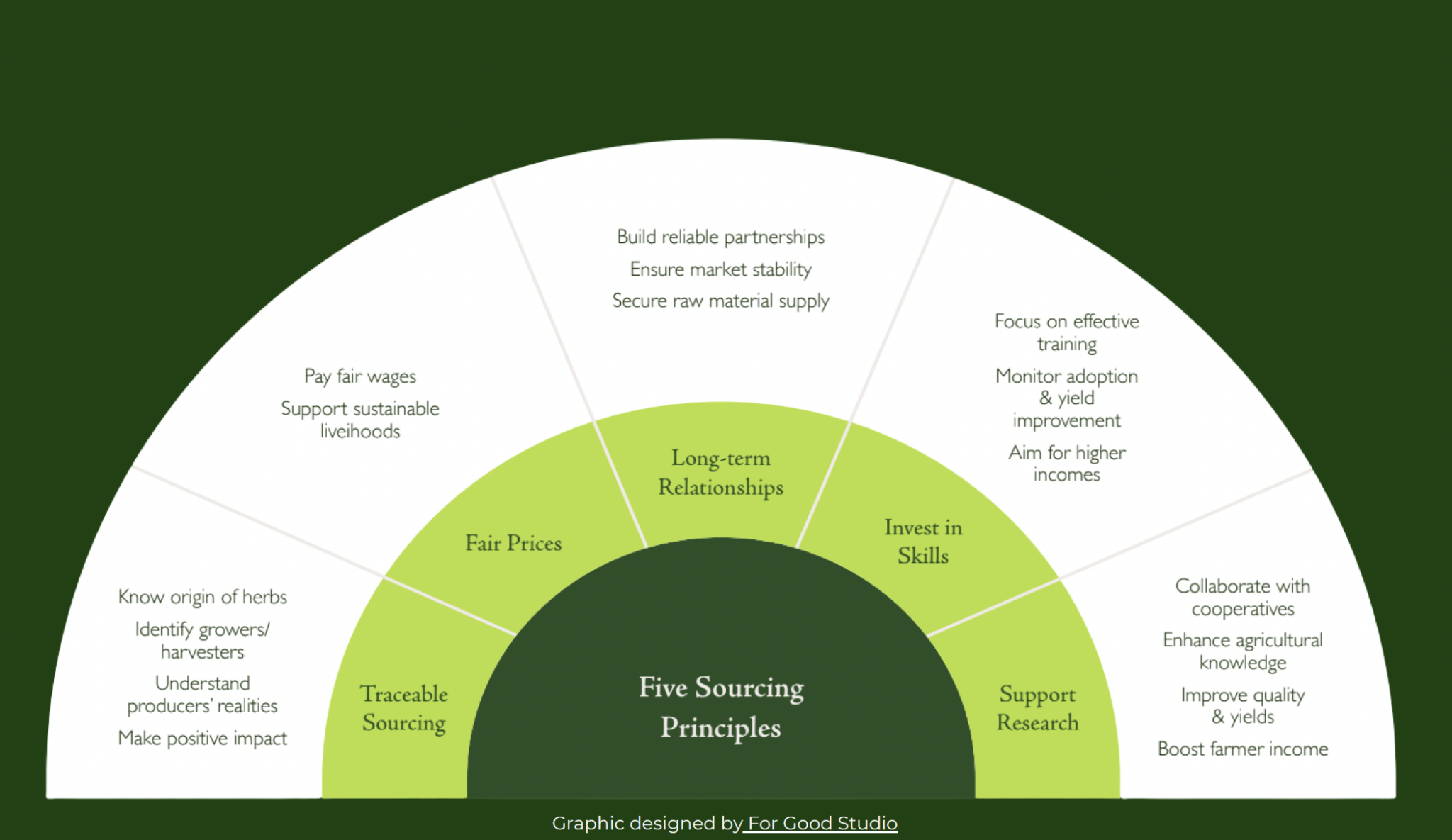
At SHI we recognize that the long term supply of the raw materials on which our companies rely depends on ecologically, economically, socially, and culturally resilient source communities. SHI members commit to these sourcing principles as guideposts of best practices to work toward building wellness and resilience in the human and ecological communities from which our company sources herbs.
1
Traceable Sourcing Practices
Get as close as possible to the farmers, wild harvesters, and processors who harvest, grow, and process the herbs with which you make your products.
Knowing the social, environmental, and economic conditions that producers and processors face is essential to taking responsibility for the impacts of your purchasing practices and for implementing meaningful action.
2
Fair Prices
Commit to making purchasing decisions based on quality and relationships rather than pressuring on price.
While not perfect, we believe third-party verified certifications with premiums are one strategy companies can use to ensure they’re investing in the long-term human and ecological health and resilience of the communities from which they source.
3
Develop Collaborative Relationships
Think of supplier relationships as a partnership based on mutual trust and transparency rather than a transactional relationship.
Commit to understanding and sharing risks, working through challenges together, and developing long-term plans.
4
Invest in Professional Development and Training for Processors and Producers
Invest in professional development and training for producers and processors to improve quality, create marketable, scaleable products, and provide greater meaning to the work for farmers, wild harvesters, and processors.
5
Support Research
Use data to guide decisions and strengthen company practices over time. Support research that helps connect quality, sustainability, and livelihoods across the supply chain. Research helps companies see clearly what’s working, what’s not, and where to focus investment for lasting ecological and economic resilience. For suggestions for research, see the complete Chapter Two.