SHI Scope 3 Emissions Project
“The SHI Scope 3 Emissions Working Group is part of the early cohort of companies that are trying to tackle this complex and immensely challenging climate action topic.”
—Eric Kowalewski, Sustainable (Munich, Germany)
How much does it really cost the climate to grow, harvest, and process the herbs that end up in teas, tinctures, and supplements? That question sits at the heart of the SHI Scope 3 Emissions Project.
Scope 3 emissions are the greenhouse gas emissions that occur outside a company’s own walls, within its supply chain, from the field where an herb is grown to the factory gate where it arrives for processing. For most companies in the natural products industry, Scope 3 emissions are the largest share of their total climate impact, and the hardest to measure.
In June 2022, after a Sustainable Herbs Initiative webinar on the carbon footprint of tea, representatives from seven herb companies — Traditional Medicinals, The Synergy Company/Pure Synergy, Yogi, Banyan Botanicals, Nature’s Sunshine, Pacific Botanicals, and Pukka Herbs — began meeting to figure out if they could do this together. What followed was a two-year collaborative research project, led by SHI and guided by the German consultancy firm Sustainable, in which those companies pooled resources and expertise to generate primary emissions data for 17 medicinal herbs across 18 sourcing networks. It is the first known effort of its kind in the herbal products industry. This page is home to the findings, tools, and lessons from that project, as well as updates from Phase 2, which launched in January 2026 with returning and new participating companies.
Phase 1 Case Study
This article summarizes findings and lessons from the first phase of this collaboration in which seven herbal products companies worked together to better understand greenhouse gas (GHG) emissions in medicinal herb supply chains. This collaboration is the first known effort in the herbal products sector to jointly generate supplier-specific emissions factor data for GHG accounting.
Next Steps
The group began Phase 2 in January 2026. Returning companies include The Synergy Company, Traditional Medicinals, Yogi, and Pacific Botanicals. ES Botanical Consulting is also participating, with Erin Smith continuing her involvement from Phase 1, when she was at Banyan Botanicals. New companies include Asheville Tea Company, Blue Sky Botanics, Harmonic Arts, Oshala Farm, and Verdure Sciences.
In 2026, the group will continue generating emissions data for botanicals, help expand primary emissions data for the botanical industry as a whole, and identify projects to reduce emissions, either individually or jointly.
"Rather than thinking in terms of discrete phases, our vision is to build a long-term, evolving partnership, one that continuously improves and expands. This means deepening the scope of technical analysis and advisory work, scaling inset projects, and engaging more companies over time. If we succeed in doing this for emissions and environmental impact, then perhaps it can also serve as a replicable model for exploring other technical areas of interest within SHI, such as sourcing, quality systems, and logistics."
Zacharia Levine, The Synergy Company, co-lead SHI Scope 3 Working Group
Why This Matters
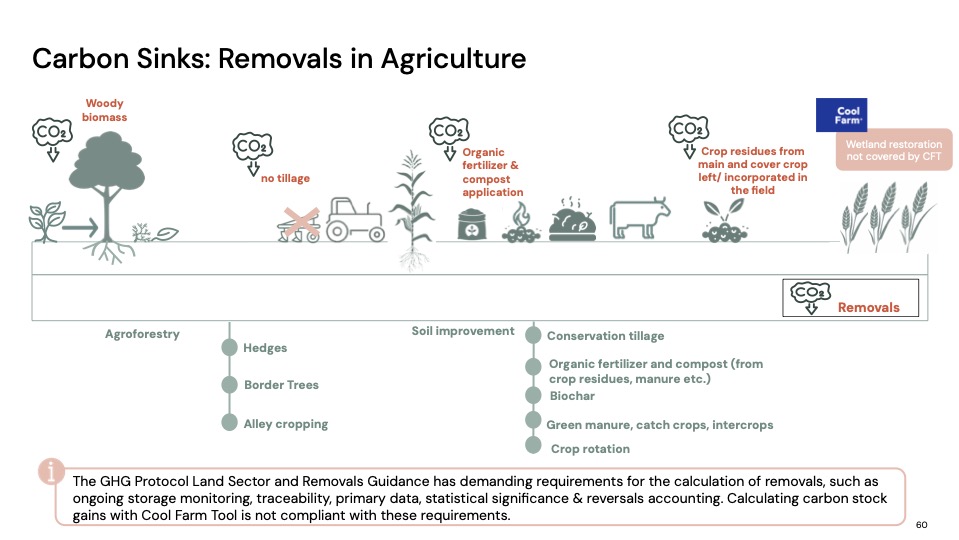
As the director of SHI, I was only indirectly involved in working with suppliers and entering data into the farmpact tool. Even so, from the beginning I was struck by the incredible level of detail required to generate emissions data, from irrigation sources to crop residue and compost management. For those unfamiliar with these tools, this project also highlights the challenges suppliers face when asked to provide that level of information, as well as why that detail is essential for meaningful, long-term emissions tracking.
To me, the most important part of this initiative is what it illustrates about responsibility. Carbon emissions are just one impact companies have in source communities. There are others: impacts on biodiversity, economic resilience, and more. In addition to the data gathered, this project is a model for corporate accountability.
Moving forward, SHI will create a platform for collective learning and knowledge sharing to make it easier for people new to this subject to get on track, and to support more widespread integration of emissions and sustainability data into the botanical industry.